

With regard to The Female and Male Athlete Triad, there are many misconceptions. Below, we have compiled several common pieces of misinformation (myths) and provided explainations to clarify Triad-related information (truths).
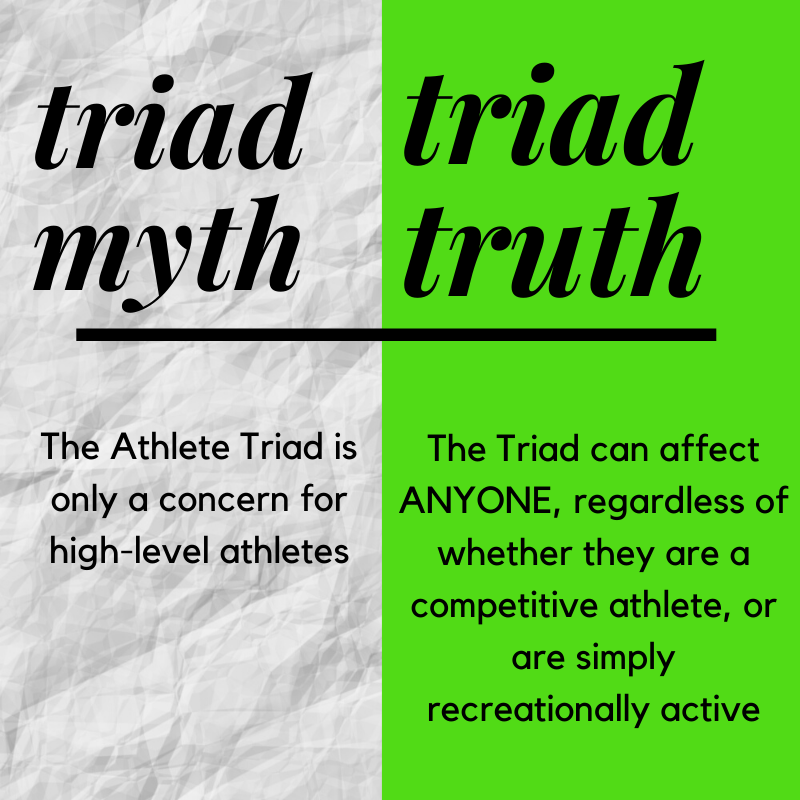
The Triad does not discriminate. Regardless of if you are an elite level athlete, or someone who enjoys exercise and being physically active recreationally, you have the potential to be affected by the Triad.
The driving factor of the Triad is energy deficiency, which can come about in a variety of ways. Burning excess calories during workouts, and/or undereating for what your body needs, are both ways in which one can achieve an energy deficiency.
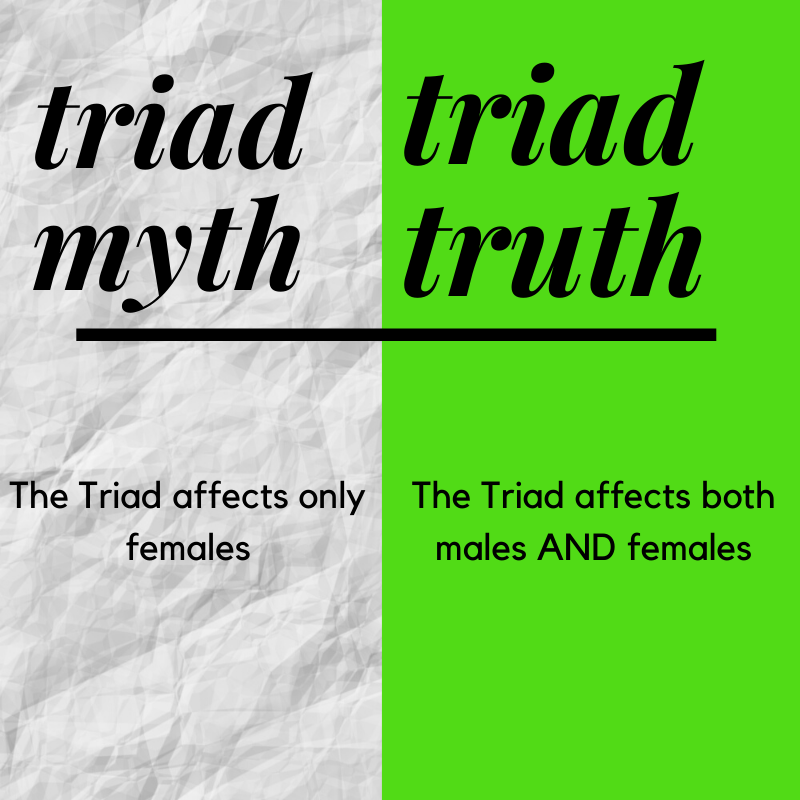
While the Triad is more prevalent in females than in males, both sexes have the potential to be affected by the Triad. Loss of menses is a prime signal of the Triad’s presence in females, and although it may be more difficult to recognize in males, their health can still be affected negatively by the Triad.
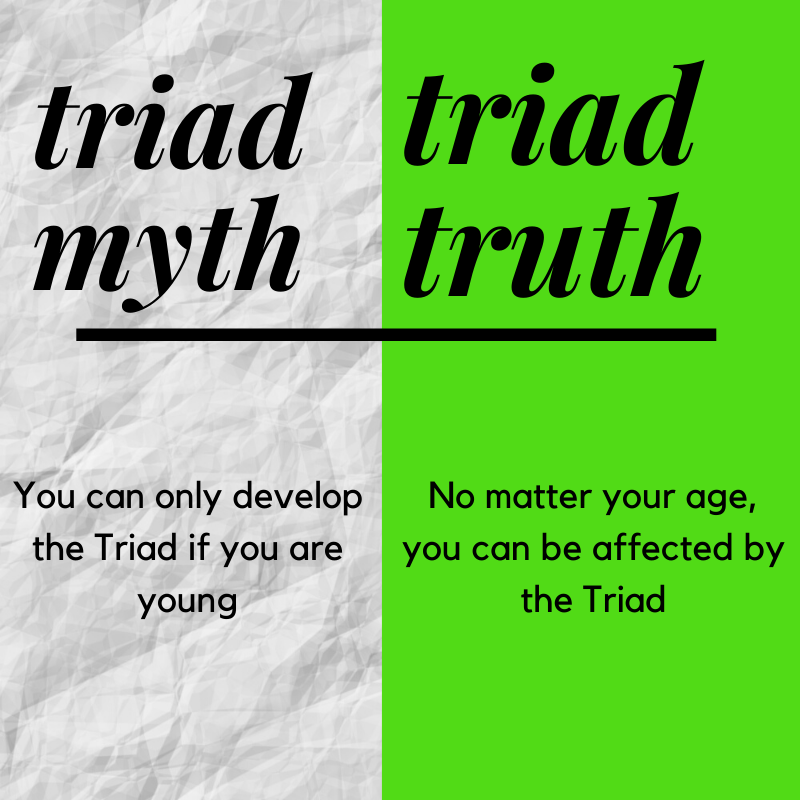
The Triad does not discriminate based on age. While the majority of those who suffer from the Triad are high school and collegiate aged girl and women, it is still possible to be affected by the Triad in your 20’s and 30’s. An energy deficiency is what drives the Triad, and anyone can be in a state of energy deficiency at any age.
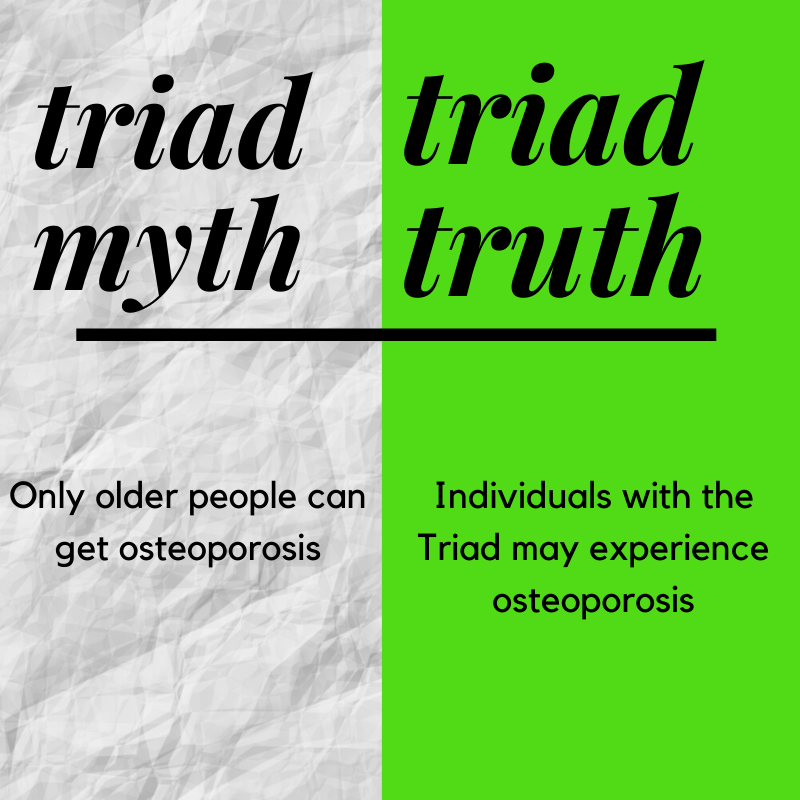
There are many younger individuals who suffer from osteoporosis due to the Triad. One component of the Triad is decreased bone health due to increased bone breakdown, and decreased bone formation. These factors may lead a younger individual to develop osteopenia or osteoporosis because of their energy deficiency and because they have stopped menstruating. Many of those affected might also get bone stress injuries and stress fractures.
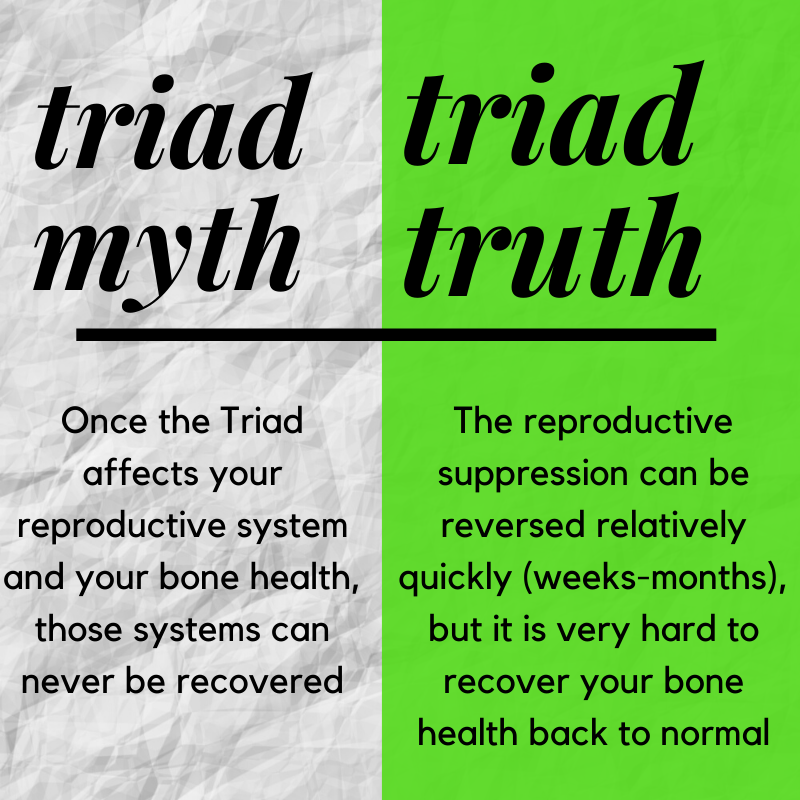
Once energy returns to a healthy level, your body is able to resume normal reproductive functioning again. Even though this may take a few weeks-months to occur, your reproductive health will return to normal functioning with proper nutrition. Once energy and reproduction are recovered, bone breakdown may decrease, but it is very difficult to recover your bone health back to normal. We now know that when an energy deficient athlete eats more calories, it protects from further bone loss- but we don’t have good data yet to know if increasing food intake results in improving bone. More research is necessary- so it is important to simply avoid the bone loss in the first place and fuel your body properly to avoid negative health effects.
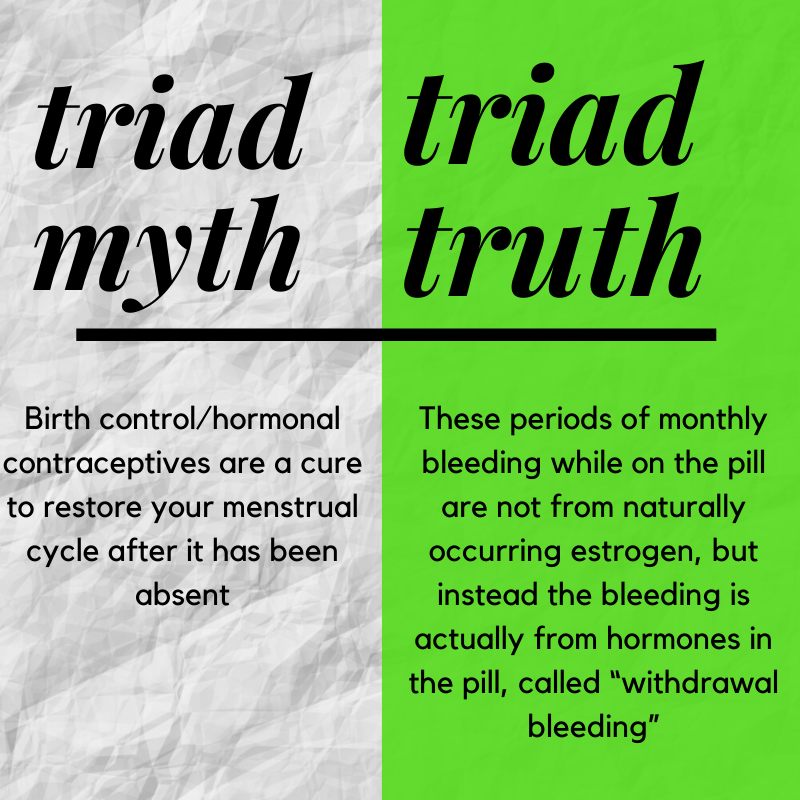
The type of estrogen that is naturally produced within a female’s body is different than the estrogen contained in birth control pills, and thus, affects the body differently. While it may appear as though you “regain” your period once you are put on the pill, this is not a true period- in fact, you do not ovulate, nor do you have the normal hormones being produced in your ovaries. To truly restore your natural menstrual cycle, when not on the pill, energy levels (calories consumed) must be increased to signal that you are healthy enough to resume proper reproductive functioning.